

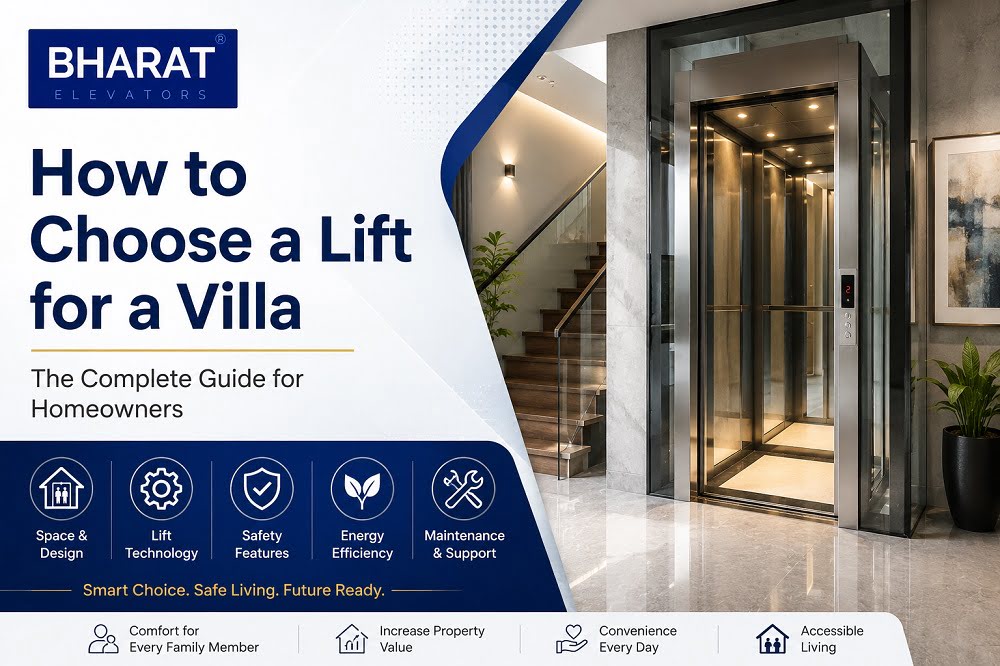
Modern villas are designed with comfort, luxury, and long-term convenience in mind. One feature increasingly becoming part of contemporary homes is a villa lift. Beyond convenience, installing a lift improves accessibility, increases property value, and makes daily movement easier for every family member.
However, choosing the right lift for a villa is not simply about selecting a design you like. Factors such as available space, technology, safety, budget, and future requirements play an important role.
This guide explains everything homeowners should consider before selecting a villa lift.
Why Install a Lift in a Villa?
Many people believe home elevators are only for luxury homes, but that perception has changed significantly.
Villa lifts provide several benefits:
- Easier movement between floors
- Convenience for elderly family members
- Improved accessibility
- Increased property value
- Better movement of heavy items
- Future-ready living solutions
A well-designed home lift improves both functionality and aesthetics.
Understand Your Space Requirements
The first step in choosing a villa lift is evaluating the available space.
Consider:
- Total number of floors
- Available shaft area
- Floor-to-floor height
- Pit depth requirements
- Headroom availability
Modern home lifts can be installed even in homes with limited space. Compact elevator solutions are increasingly popular for duplex houses and villas.
If your home is already constructed, retrofitting options may also be available with minimal structural modifications.
Choose the Right Lift Technology
Different elevator technologies serve different requirements.
Hydraulic Lifts
Hydraulic lifts are often selected for villas because they offer:
- Smooth operation
- Quiet performance
- Lower structural requirements
- Comfortable ride quality
These systems are usually suitable for low-rise buildings.
Machine Room Less (MRL) Lifts
MRL elevators are becoming increasingly popular because:
- No separate machine room is required
- Space utilization improves
- Installation flexibility increases
- Energy efficiency is better
They work well for modern villa designs.
Traction Elevators
Traction systems are suitable when:
- More floors are involved
- Higher travel speed is required
- Long-term efficiency is important
The choice depends on building structure and usage needs.
Consider Lift Capacity
Capacity determines how many people or how much weight the elevator can carry comfortably.
Typical villa lift capacities include:
- 3-person capacity
- 4-person capacity
- 6-person capacity
Choosing an oversized lift may increase costs unnecessarily, while selecting a smaller lift may reduce convenience.
The best approach is to evaluate family size and expected usage.
Safety Features Should Never Be Ignored
Safety should always be a priority when selecting a home lift.
Look for features such as:
- Emergency alarm system
- Automatic rescue device
- Overload protection
- Emergency stop button
- Door sensors
- Backup power systems
- Child safety functions
Modern elevators include advanced systems designed to ensure safe operation during unexpected situations.
Think About Interior Design
Villa elevators today are part of interior aesthetics rather than only functional equipment.
Popular design choices include:
- Glass cabins
- Stainless steel finishes
- Designer lighting
- Premium flooring
- Digital control panels
- Customized wall textures
Choosing a design that complements your home architecture creates a more seamless appearance.
Evaluate Energy Efficiency
Homeowners increasingly prefer energy-efficient systems because they reduce operating costs.
Features that help reduce electricity consumption include:
- LED lighting
- Efficient motors
- Sleep mode operation
- Regenerative drive systems
Lower energy usage helps reduce long-term expenses.
Consider Maintenance Requirements
Maintenance directly affects long-term ownership costs.
Before purchasing, ask:
- How frequently is maintenance needed?
- Is annual maintenance available?
- What is included in service support?
- How quickly can emergency service be provided?
Reliable after-sales support can be as important as the lift itself.
Questions to Ask Before Finalizing a Villa Lift
Before making a final decision, ask:
- Which lift type suits my villa design?
- Can installation be completed without major structural changes?
- How much electricity does it consume?
- What safety systems are included?
- Is customization available?
- What maintenance support is offered?
Final Thoughts
Choosing a lift for a villa requires balancing comfort, technology, safety, and long-term value. The right system should fit your home’s structure while providing reliable performance for years.
A carefully selected villa lift is not just a convenience feature—it becomes an important part of modern living that enhances accessibility, comfort, and overall property value.