

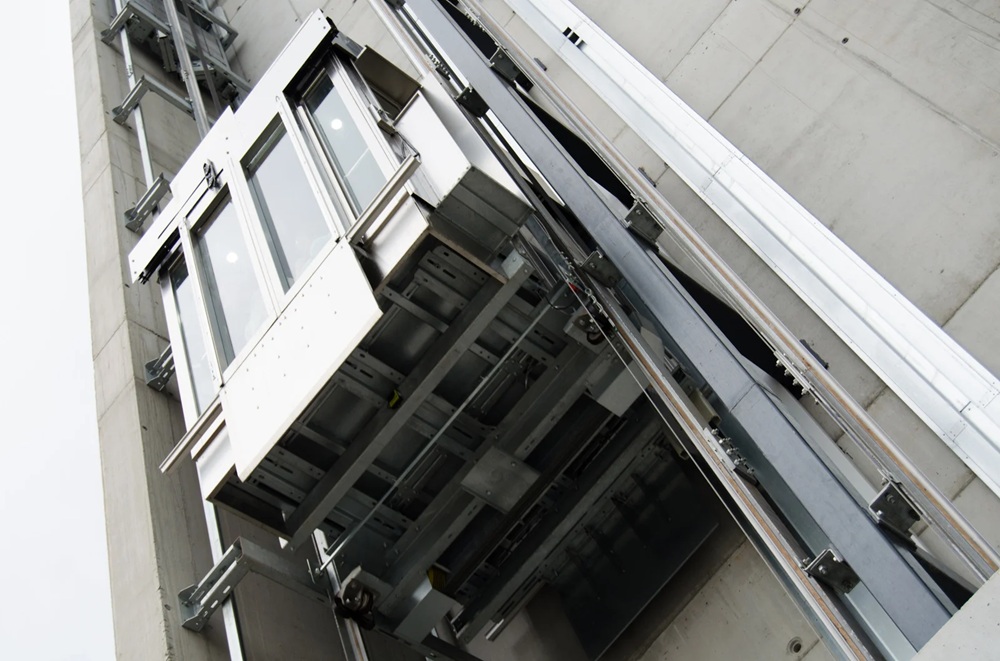
Traction lifts are among the most widely used elevator systems across residential, commercial, and industrial buildings. Known for their smooth movement, high efficiency, and ability to travel long distances, traction lifts remain a preferred choice for modern vertical transportation. In this blog, we’ll explore how traction lifts work, what makes them beneficial, and where they are most commonly used.
How Traction Lifts Work
Traction lifts operate using a rope-and-counterweight mechanism that uses friction to move the lift car. Instead of pushing from below (like hydraulic lifts), traction systems pull the elevator car upward or downward.
Key Working Components
-
Hoist Motor: Drives the lift, controlling its speed and direction.
-
Steel Ropes or Belts: Connected to both the lift car and counterweight.
-
Drive Sheave (Pulley): Provides friction to move the ropes.
-
Counterweight: Balances the lift car, reducing power usage.
-
Guide Rails: Keep both the car and counterweight aligned for a stable ride.
When the motor turns the drive sheave, the ropes move, pulling the lift car up while the counterweight moves down, and vice versa. This balanced movement makes traction lifts highly efficient and ideal for taller buildings.
Types of Traction Lifts
1. Geared Traction Lifts
These lifts use a gearbox connected to the motor.
Best for: Mid-rise buildings needing moderate speed and travel height.
2. Gearless Traction Lifts
The motor directly drives the sheave with no gearbox, offering superior performance.
Best for: High-rise buildings requiring high speed, comfort, and efficiency.
Benefits of Traction Lifts
Energy Efficient
The counterweight system reduces the load on the motor, making traction lifts more energy-saving compared to many other lift types.
Smooth & Fast Operation
Traction lifts provide quick, comfortable travel between floors with minimal vibration.
Ideal for Tall Buildings
Their rope-and-pulley mechanism allows greater travel heights, making them perfect for mid-rise and high-rise structures.
Space-Saving Options
Many modern traction lifts come in MRL (Machine Room-Less) designs, reducing the need for extra building space.
Lower Operational Costs
With efficient power usage and durable components, traction lifts often have lower long-term running costs.
Where Traction Lifts Are Used
Traction lifts are versatile and suited for a wide range of environments. Here are the most common applications:
1. Commercial Buildings
Shopping malls, hospitals, offices, and hotels rely on traction lifts for fast and reliable vertical transport.
2. High-Rise Residential Buildings
Apartments and condominiums use traction lifts to provide smooth, high-speed movement across multiple floors.
3. Industrial and Institutional Facilities
Warehouses, educational institutions, and government buildings use heavy-duty traction lifts for efficient mobility.
4. Public Infrastructure
Railway stations, airports, and metro stations use traction lifts due to their durability and high travel capacity.
Conclusion
Traction lifts combine performance, safety, and efficiency, making them an essential elevator system for modern structures. Their ability to travel long distances, operate smoothly, and save energy makes traction elevators the ideal choice for both residential and commercial buildings.